Bedroom planning · Design guide
A Style-First Guide to Platform Frames and Bedroom Layouts
A bed is the room’s largest piece of furniture, and often its visual anchor. A platform frame can make a bedroom feel spare and contemporary, warm and handcrafted, or grounded and substantial. The right choice is not simply the one that looks good in a showroom: it must also fit the room, the mattress, the bedside furniture and the ordinary routes people take through the space.
Published October 29, 2026
Platform beds have a deceptively simple premise. Their frame supports a mattress directly, typically on a solid surface or a system of slats, rather than relying on a separate box spring. That clean arrangement can streamline a bedroom, but “platform” describes a support style, not a single look. Frames range from barely raised, unobtrusive forms to broad, architectural designs with prominent headboards and deep rails.
That variety makes the platform frame a useful starting point for a bedroom plan. Its height changes how the room reads. Its materials set a tone. Its footprint affects circulation, and its construction determines what kind of mattress support it needs. A thoughtful choice brings these questions together, balancing a polished appearance with comfortable everyday use.
Begin with the room, not the frame
Before falling for a silhouette or finish, measure the bedroom. Note the length and width of the room, the locations of doors and windows, closet openings, heating elements and outlets. Include the path of the door as it swings. A bed that fits on paper can still create a daily obstacle if it blocks a closet, narrows the route to the window or leaves no comfortable way to get in and out.
Measure the mattress as well as the proposed frame. The frame’s outside dimensions are usually larger than the mattress dimensions, sometimes by enough to affect a tight layout. Check the product specifications for overall width and length, and allow for any headboard, footboard or projecting hardware. If a frame has a broad side rail, its visual and physical footprint may be more substantial than the mattress alone suggests.
Then consider how the room is used. Is the bed shared? Does one person need an especially clear approach on a particular side? Is the bedroom also a reading space, a home office or a place to get dressed? A successful layout makes room for those activities without turning the bed into an obstacle course. In a small room, a modestly sized frame and clear walking routes may matter more than adding another piece of furniture.
Height shapes the atmosphere
A low platform frame can make a room feel open. With less visible structure beneath the mattress, more wall and floor remain in view, creating a relaxed, horizontal line. That effect can suit a compact bedroom or a room with a restrained, contemporary scheme. It can also make a tall ceiling feel more pronounced by drawing the eye across rather than upward.
Low is not automatically better. Getting in and out of a very low bed may be uncomfortable for some people, and the height of the finished sleep surface depends on both the frame and mattress. Consider the combined height, not just the frame’s clearance. The best measure is practical: whether the person using the bed can sit down and stand up comfortably, and whether the mattress feels proportionate beside nearby furniture.
A taller frame can lend a bedroom more presence and may make it easier to get into bed. It can also increase visual weight, especially when paired with a tall headboard, thick mattress and dark finish. That is not a flaw; it is a design decision. In a spacious room, a substantial bed can provide a reassuring center. In a narrow room, the same piece may dominate the view and make circulation feel tighter.
Nightstands should relate to the mattress surface. A bedside table that is markedly higher or lower can be awkward to use and visually out of step. Measure the top of the mattress after bedding is in place, then compare it with the height of the table. A few inches of difference may be comfortable, but the right relationship depends on reach, personal preference and the furniture’s shape.
Read the frame’s visual weight
Visual weight is the sense that an object feels light or heavy in a room. It is shaped by more than actual size. Thick rails, a solid footboard, a dark stain and a wide headboard can make a frame feel imposing. Slim legs, open space beneath the bed, pale finishes and simple lines can make a similarly sized frame appear lighter.
For a calm, uncluttered bedroom, look for a design with clear proportions and details that do not compete for attention. A low footboard can preserve an open sightline across the room, while a headboard gives the bed a finished back and can create a natural focal point. If the bedroom already contains patterned wallpaper, strong artwork or ornate furniture, a quieter frame may help the whole composition settle.
In a more minimal room, the bed can carry more of the design. A strong wood grain, distinctive joinery or a confident headboard can provide character without requiring many decorative objects. The aim is not to decorate every surface, but to decide where the eye should land. Since the bed is often the largest object in view, it is a natural place to establish that hierarchy.
Choose materials with the whole room in mind
Wood brings warmth and visible texture. Its character varies with species, grain, finish and construction, so sample images may not tell the entire story. Compare the finish with the floor, doors and existing furniture under the room’s actual lighting. Matching every wood tone is not essential; related undertones and a deliberate contrast can look more considered than an almost-match.
Metal and upholstered frames offer different effects. A slim metal structure can read as airy and graphic. Upholstery softens the bed’s outline and may be appealing for sitting up against a headboard, though fabric introduces care considerations. In either case, consider how the material will age with daily use and whether its surface is compatible with household routines.
Construction deserves attention alongside appearance. Ask how the mattress is supported, what the frame is made from, whether the support system is included and what assembly requires. Slat spacing and mattress compatibility matter: follow the frame and mattress manufacturers’ guidance rather than assuming every mattress works on every platform. Confirm weight limits and any care or maintenance instructions before deciding.
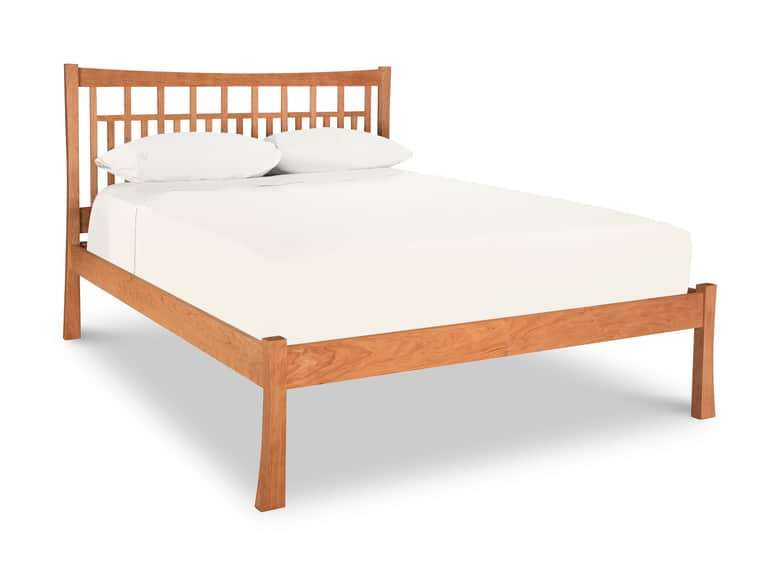
A useful example of a restrained wood design is the Contemporary Craftsman Low Footboard Bed. Its solid-wood construction, Arts and Crafts styling and low footboard illustrate how material and silhouette can provide character without adding a tall barrier at the foot of the bed. The product information describes an oil finish and a platform construction; anyone considering a frame should still check its dimensions and support details against their own mattress and room.
Plan the layout around movement
A bedroom should be easy to cross in the dark and easy to use in the morning. Begin by placing the bed where it has a clear, stable relationship to the room, often with the headboard against a solid wall. That familiar arrangement is not mandatory. A large room, unusual window placement or a need to preserve a route may call for another solution. What matters is that the bed does not obstruct doors, drawers or essential paths.
Think in routes rather than isolated gaps. Trace the path from the bedroom door to the bed, from the bed to the closet, and from the bed to any bathroom entrance. Consider whether drawers can open fully and whether closet doors can move without collision. In a shared room, check access on both sides where possible. Even a handsome layout can become frustrating if one person must climb over another to get out.
There is no single clearance figure that works for every bedroom and furniture plan. Instead, allow enough space for the people who use the room to pass, turn and reach what they need. If dimensions are tight, mark the bed’s footprint on the floor with painter’s tape. Add the bedside tables and any storage pieces. Walk around the taped outline, open nearby doors and drawers, and test whether the room still functions.
Leave visual breathing room as well as physical clearance. A frame pressed against every neighboring object can make the room feel crowded even when everything technically fits. A small amount of open floor around the bed helps define its shape and gives the eye a place to rest. If the room cannot spare much space, choose simpler furniture and reduce the number of pieces rather than trying to squeeze in a complete matching set.
Make bedside furniture earn its place
Nightstands are useful, but they do not have to be identical or large. Their essential job is to put frequently used items within reach: a lamp, glasses, a book, a phone or a glass of water. In a narrow room, a compact table, wall-mounted shelf or slim cabinet may serve better than a deep nightstand. The choice should respond to actual habits, not a picture of an idealized bedroom.
Matching bedside tables create symmetry and a composed look, especially with a centered bed. Different pieces can work just as well when they share a feature such as finish, height, shape or visual weight. This flexibility is useful when the room has different conditions on each side of the bed. Avoid forcing symmetry if it interferes with a door, window or comfortable route.
Lighting is part of the layout. A bedside lamp needs a stable surface and a reachable switch; a wall light can free up table space but requires suitable placement and, in some cases, installation. Check outlet locations before settling on a plan. A beautiful nightstand becomes less useful if its cord crosses a walkway or the lamp cannot be switched off from bed.
Treat storage as a design decision
Platform frames do not all offer the same storage. Some sit close to the floor, leaving little room beneath; others stand higher or include drawers. Under-bed storage can make efficient use of a small bedroom, but it should be weighed against access, dust and the need to keep the floor visually open. Measure the available height and the clearance needed to pull containers out. Do not assume that a storage box will fit simply because it appears low.
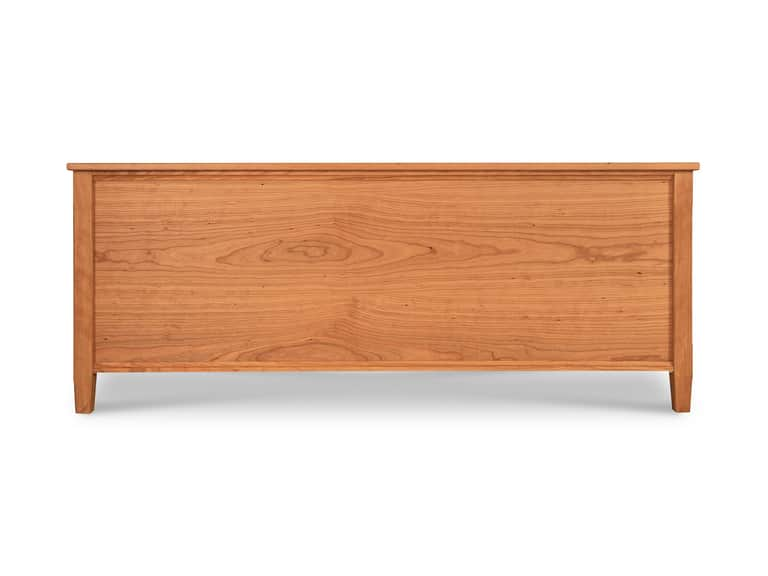
Storage can also sit at the foot of the bed, provided it does not pinch the room’s main route. A blanket chest, for instance, may be practical where there is sufficient clearance to open the lid and move around it. A Vermont Shaker Blanket Chest is described as a handmade storage piece for blankets and household essentials, with a lid that stays open when raised. Its dimensions and opening clearance should be considered alongside the bed footprint, not as an afterthought.
Before adding storage, take inventory of what needs to live in the room. Bedding, seasonal clothing and books may call for different solutions. A single well-placed piece can be more effective than several small containers that crowd the floor. If the room already feels busy, closed storage can reduce visible clutter; if it feels heavy, open floor and fewer furnishings may be the better answer.
Match the frame to the mattress and bedding
The frame and mattress should be considered together. Mattress thickness changes the final height, and some mattress types have specific support requirements. Check the manufacturer’s instructions for platform compatibility, foundation needs and slat spacing. Verify that the mattress sits securely within the frame and that its edges align as intended. A frame’s appearance cannot compensate for an unsuitable support arrangement.
Bedding changes the visual result, too. A thick duvet can soften sharp lines and make a low frame feel more inviting. A neatly tucked cover emphasizes the platform’s geometry. Sheets and blankets in closely related tones create a quiet effect; a contrasting cover can make the bed the room’s focal point. Texture often adds interest without introducing a busy pattern, particularly when the frame itself has prominent grain or detailing.
Keep comfort and care in the picture. Bedding should suit the sleeper’s temperature preferences and cleaning routine. A protective layer can help keep the mattress surface clean, but it should fit properly and follow its own care instructions. The bed is not only a design object; it is a daily-use surface, and the materials chosen should make that use easier rather than more complicated.
A simple process for choosing well
When several platform frames seem appealing, a short decision process can bring the practical and visual questions into focus:
- Measure the room: Record wall dimensions, door swings, windows, closets, outlets and fixed features.
- Confirm the footprint: Compare the frame’s outside dimensions with the mattress and mark the proposed placement on the floor.
- Check the finished height: Add frame and mattress heights, then consider ease of entry and the relationship to bedside furniture.
- Assess support: Review mattress compatibility, platform or slat requirements, weight capacity and assembly instructions.
- Choose a visual role: Decide whether the bed should recede quietly or serve as the room’s principal statement.
- Test circulation: Walk the routes, open doors and drawers, and make sure both sides of the bed work for their users.
- Plan storage and lighting: Add only what supports real routines, checking clearances, cords and access.
The room should feel lived in, not staged
Good bedroom design is often less about adding pieces than making the important ones work together. A platform frame establishes a line and a center. The mattress determines the final height and comfort. Nightstands, lighting and storage make the layout usable. Each decision has an effect beyond its own footprint.
For Connecticut homes, as elsewhere, room conditions vary widely—from compact apartments to older houses with unusual dimensions and newer spaces with more open plans. There is no regional formula for the right bed. The useful questions are local to the room: how people move through it, what the architecture allows, what needs to be stored and which materials feel at home there.
A frame earns its place when its style and function agree. It should suit the room without overwhelming it, support the mattress as intended and leave enough space for ordinary life. Choose for those conditions first, and the polished look is more likely to last beyond the first impression.